
The post CLARITY Act: Here’s the Critical Timeline Crypto Markets Are Watching appeared first on Coinpedia Fintech News
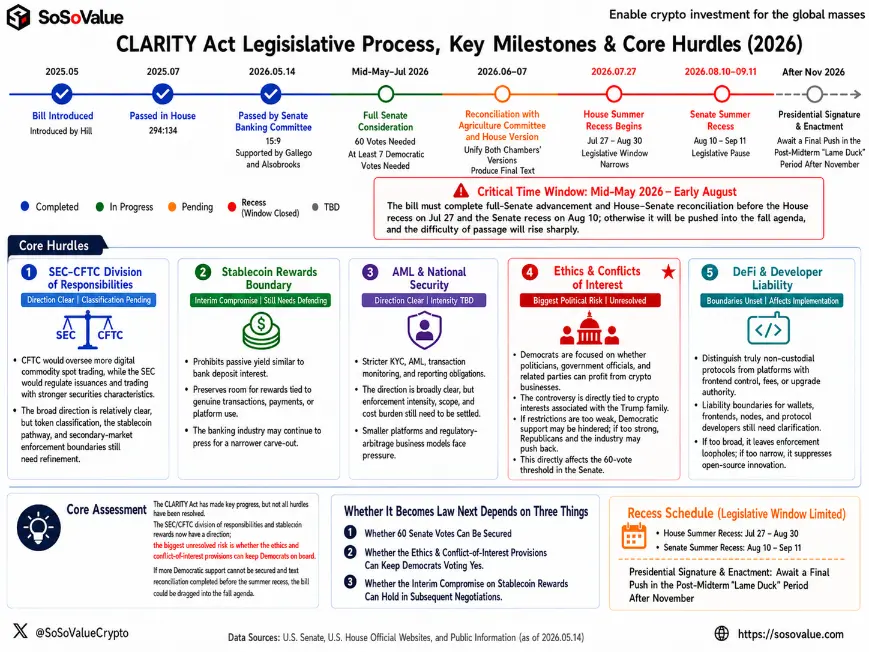
The biggest U.S. crypto legislation in years has cleared another major hurdle after the Senate Banking Committee voted 15-9 on May 14 to advance the CLARITY Act. The bill now moves into a critical phase as lawmakers race to overcome political and regulatory challenges before Congress breaks for its summer recess, a timeline crypto markets are watching closely.
Here’s the critical timeline crypto markets are watching
Senate Banking Committee Approves CLARITY Act
The legislation aims to end the long-running regulatory conflict between the Securities and Exchange Commission (SEC) and the Commodity Futures Trading Commission (CFTC), which has left much of the digital asset industry operating in legal uncertainty.
Under the proposed framework, the CFTC would oversee most digital commodities, while the SEC would continue regulating crypto assets classified as securities.
Senator Bernie Moreno’s Warn, “The Clarity Act has to pass by May, before the summer congressional recess, because it is unlikely to pass after the November midterm elections.”
Even Senator Cynthia Lummis warned that missing the tight pre-recess operational windows would severely risk delaying any comprehensive crypto market structure overhaul from being revisited until as late as 2030.
That could significantly impact major crypto assets including Bitcoin, Ethereum, XRP, Cardano and several other altcoins currently operating in regulatory gray zones.
Critical Timeline Now Begins
The next few months could determine whether the bill becomes law in 2026 or gets delayed again.
Before passage can happen, the CLARITY Act must clear the full Senate and then survive House-Senate reconciliation before Congress enters recess.
Lawmakers now face two major deadlines:
- House recess begins July 27
- Senate recess starts August 10
If the legislation misses that window, the bill could be pushed into the crowded fall political calendar, where passage becomes significantly harder heading into election season.
Five Major Political Risks Still Remain
Despite recent progress, several major hurdles could still derail the bill.
First and one of the biggest unresolved issues remains the division of power between the SEC and CFTC over crypto oversight.
- Stablecoin reward structures,
- Stricter AML and KYC requirements
- DeFi developer liability rules also remain under active negotiation.
The fifth major huddle and the largest political battle now centers around ethics provisions tied to crypto involvement by public officials, including scrutiny surrounding Donald Trump family-linked crypto projects.
The bill will likely require at least 60 Senate votes to move forward, meaning several Democrats would still need to support the legislation.
What Does This Means For Crypto Investors?
For crypto markets, the stakes are massive.
If passed, the CLARITY Act could become the first major U.S. law to formally define crypto market structure, potentially unlocking stronger institutional participation while reducing years of regulatory uncertainty surrounding the digital asset industry.