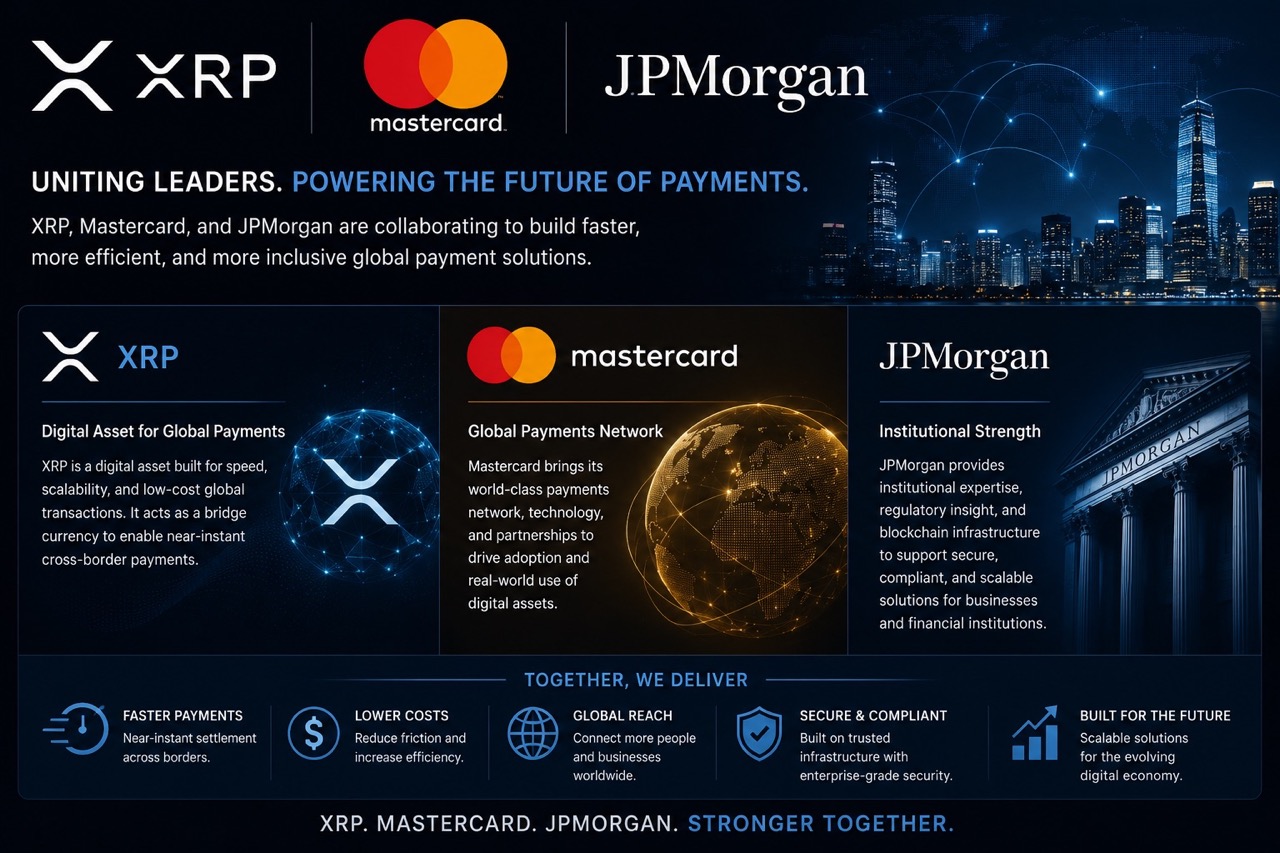
Ripple and XRP moved further into institutional finance after Mastercard, Ondo Finance, and Kinexys by JPMorgan completed a major blockchain-based settlement pilot involving tokenized US Treasuries. Announced on May 6, 2026, the pilot transaction connected the XRP Ledger with traditional interbank payment rails, offering a clearer picture of how blockchain networks operate alongside global banking infrastructure.
Mastercard, Ripple And JPMorgan Connect Banking Rails
The development first gained attention after @Mastercard published a post on X confirming that it had completed a landmark transaction alongside Ondo Finance, Ripple, and Kinexys by JPMorgan. Mastercard explained that the pilot linked a public blockchain network with interbank settlement systems, while also describing the initiative as groundwork for financial markets capable of operating continuously without closing hours.
Shortly after the announcement, @RippleXity expanded on the details of the transaction by explaining how each company contributed to the process. According to the breakdown shared online, the transaction centered around OUSG, Ondo Finance’s tokenized short-term US Treasury fund. The product reportedly manages more than $670 million in assets and is considered one of the larger tokenized treasury offerings currently available alongside similar products linked to firms such as BlackRock and Franklin Templeton.
RippleXity explained that Ripple processed the OUSG redemption directly on the XRP Ledger, allowing the blockchain to function as the settlement layer for the transaction. Mastercard’s Multi-Token Network then routed transaction instructions through its infrastructure before JPMorgan’s Kinexys platform delivered the US dollar payment into Ripple’s Singapore bank account.
They further noted that the transaction settled in near real time despite involving multiple banks, cross-border transfers, and traditional financial systems. It was also completed outside regular banking hours, showing how blockchain infrastructure can support 24/7 settlement activity.
XRP Ledger: The Bridge Between Traditional And Tokenized Finance
As discussion around the pilot continued, RippleXity placed strong attention on the role of the XRP Ledger in linking tokenized assets with existing financial systems. The explanation highlighted that the transaction relied on a public blockchain rather than a private institutional network, a distinction many supporters consider important within the evolving digital asset industry.
The XRP Ledger was presented as the public settlement layer allowing tokenized treasuries and traditional banking rails to interact within a live cross-border transaction. RippleXity also pointed to the scale of the institutions involved, noting that Kinexys already handles billions of dollars in daily transaction activity while Mastercard remains deeply embedded in global payment infrastructure. Alongside Ondo Finance’s expanding tokenized asset business, the pilot was framed as a sign that major financial firms are increasingly exploring blockchain-based settlement systems tied to real-world assets and round-the-clock market access.
For Ripple and XRP, the development added to the growing institutional case for XRP Ledger technology in liquidity movement and cross-border settlement. Although traditional banking infrastructure still completed the fiat transfer, the pilot demonstrated how blockchain networks and conventional financial rails are increasingly being designed to work together within real-world global transactions.