Students in Kent could “incubate” meningitis and spread it to other parts of the UK, a health official has speculated as his “most likely” scenario.
The number of cases in the county’s outbreak rose on Friday from 27 to 29, with 18 defined as confirmed and another 11 probable, according to the UK Health Security Agency (UKHSA). The cases include two students who have died.
Meningitis outbreak latest: Health officials reveal ‘worst case scenario’
So far, all the meningitis cases have links to Kent after a so-called “superspreading event” at the Club Chemistry nightclub in Canterbury.
As health chiefs battle to contain the bacterial outbreak, Kent County Council’s director of public health Dr Anjan Ghosh has speculated on three “rough” scenarios over the next four weeks.
At a briefing on Friday, he said one theory is that cases remain contained in Kent.
A second scenario, which he described as the “most likely”, would involve people travelling off campus outside Kent and then spreading the bacteria to others within a household.
First lab-grown oesophagus successfully implanted in pigs
Weight loss jabs may help with anxiety and depression, study finds
This is how many times toddlers get sick at nursery – and what can be done
“They were incubating when they left, and then they become cases, and there are small household, sporadic clusters outside of Kent,” said Dr Ghosh.
He stressed these cases would be “containable” and the risk of infection is low.
But a “worst-case scenario”, which he said was “highly unlikely”, could result in another cluster outside the county.
Ed Waller, deputy chief executive of NHS Kent and Medway, also said a request has been made for a further 5,000 doses of vaccine as part of a local programme to protect those most at risk.
Among the 18 confirmed cases, 13 have been identified by UKHSA as meningococcal group B. All cases have required hospital admission.
A 21-year-old student at the University of Kent and a sixth form pupil at Queen Elizabeth’s Grammar School in Faversham have died in the current outbreak.
The UKHSA said four schools in Kent have confirmed cases of meningitis, while the London animation and games school Escape Studios said one of its students with links to the county had contracted meningitis.
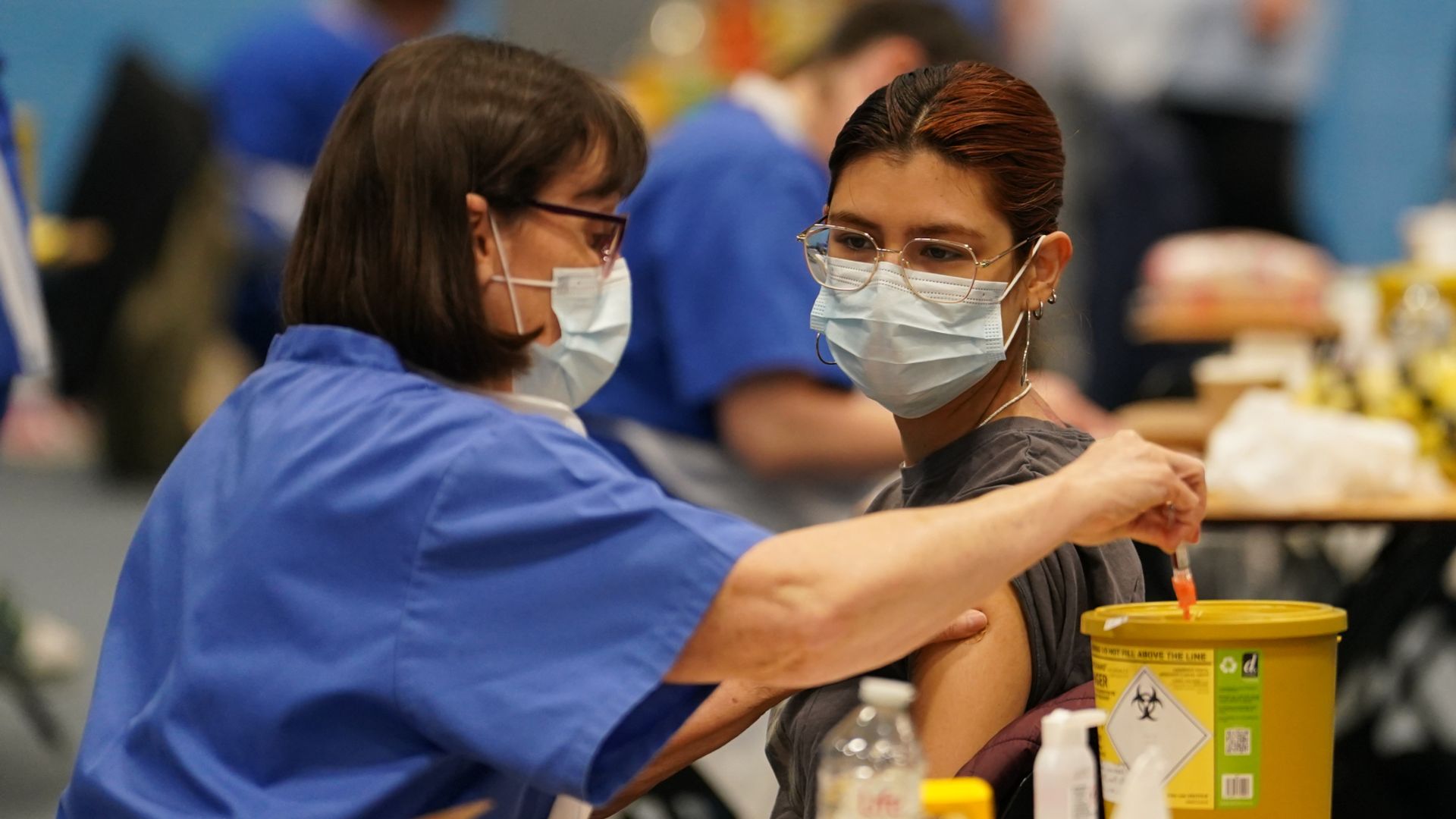
Over 2,500 people have now been successfully vaccinated, and 9,840 doses of antibiotics have been administered at several sites in the county.
Large queues have formed at the sites, including at the University of Kent, although some were turned away on Friday. The same issue occurred on Thursday, which was explained as a staffing problem.
More meningitis vaccination centres are due to open across Kent to help meet demand.
Read more from Sky News:
Explainer: Meningitis symptoms
Meningitis outbreak is baffling
Analysis: Young people most at risk
The UKHSA has now completed a genetic analysis of the meningitis bacteria.
Google users can see more from their preferred sources in search results – click here to make yours Sky News
Brendan Wren, professor of Microbial Pathogenesis at the London School of Hygiene and Tropical Medicine (LSHTM), said the strain circulating in Kent “appears to be a new subvariant” of a type of group B meningococci bacteria which “has been previously identified in the UK”.
“The current Bexsero MenB vaccine is based on the cell surface antigens of MenB strains and should provide protection against the MenB ST-41/44 variant,” he added.
Be the first to get Breaking News
Install the Sky News app for free
Meanwhile, Paul Hunter, professor in medicine at the University of East Anglia, speculated that cases may have peaked.
“The incubation period, though a little uncertain, ranges from two to 10 days, so I think we can be fairly certain that the peak from the initial superspreading event will have already passed,” he said.