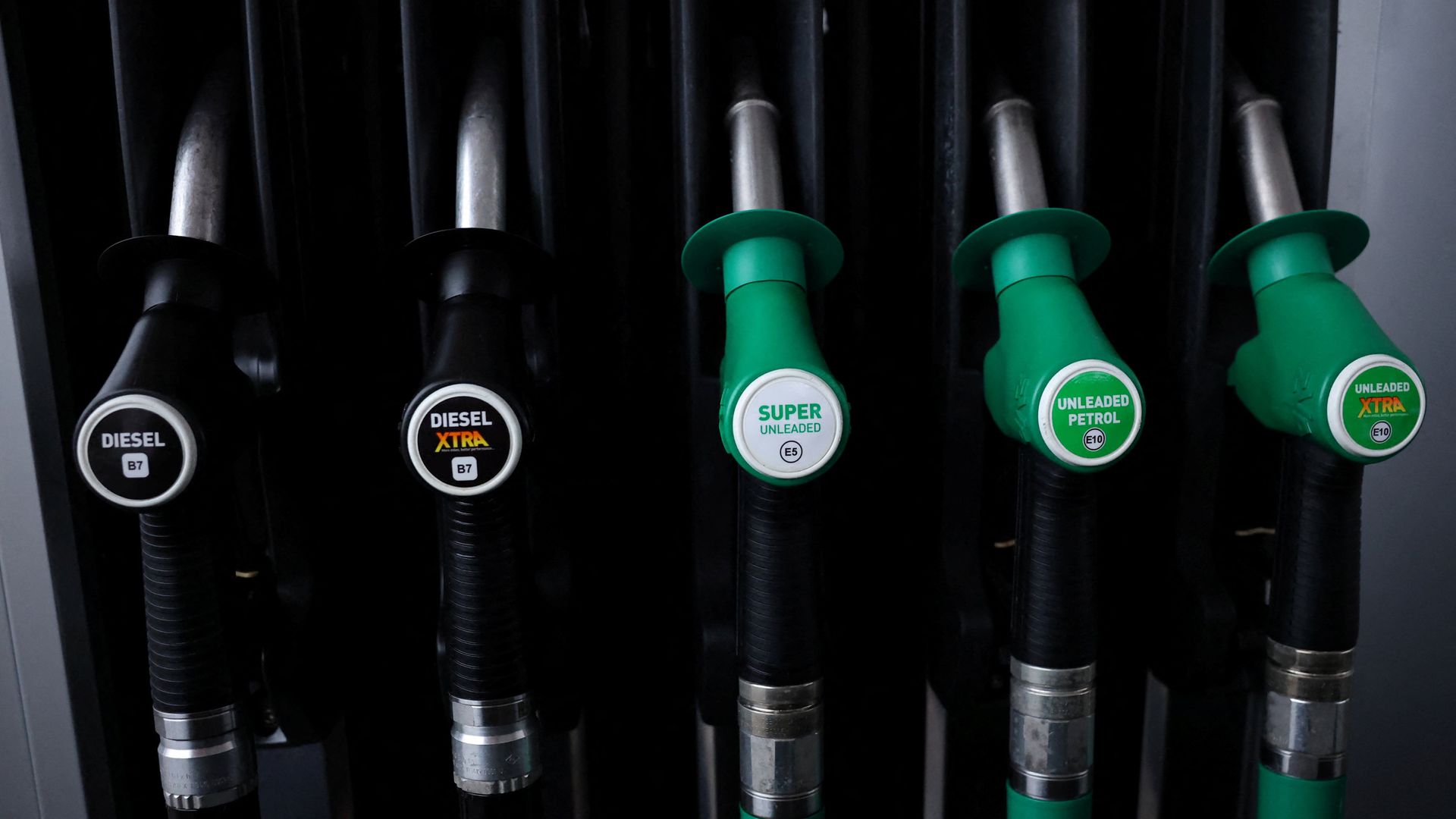
Petrol and diesel prices have jumped over the past two weeks as the Iran war pushes up oil prices.
Diesel prices have risen by an average of 18p per litre from 142.4p to 160.3p since the US and Israel launched strikes on Iran at the end of February, new RAC figures show.
The 13% increase means diesel is at its most expensive level since November 2023.
Follow the latest consumer news in our Money blog
Petrol prices are up 7% over the same period, rising from 132.8p to 141.5p a litre. The last time petrol was more expensive was August 2024.
Oil prices – which have a significant effect on the cost of wholesale fuel – have exceeded $100 a barrel for the first time since 2022 due to the conflict.
But this isn’t the only cost that determines the price drivers have to pay to fill up.
What makes up the price we pay for fuel?
At least 50% of the price paid per litre is made up of tax. This is split between VAT and fuel duty.
VAT makes up 17% of the price we pay for both petrol and diesel.
For more information about how we use your data and your rights, you can visit our Privacy Centre.
Fuel duty, a tax levied on purchases of petrol, diesel and a variety of other fuels, accounts for 38% for petrol and 33% for diesel, according to the RAC.
The cost of wholesale fuel makes up 33% for petrol and 40% for diesel.
The rest of the price is made up of:
• Retailer margins – the amount retailers make every time they sell a litre of fuel
• The cost of delivering and distributing fuel
• Bio-content – the cost of making fuel more eco-friendly
What is fuel duty and how much does it make for the government?
Fuel duty on standard petrol and diesel stands at 52.95p a litre.
This includes a temporary 5p cut that was introduced when the Ukraine war began in 2022, and has subsequently been extended.
The 5p cut is due to be gradually reduced from August, and will be completely reversed by March 2027.
The first phase will see the duty rise by 1p per litre to 53.95p, followed by another 2p in December and a final 2p next March.
At its current level, fuel duty generates around £24bn in revenue for the government, according to the Office for Budget Responsibility.
That’s around 1.9% of all money the government takes in and is equivalent to £835 per household, it said.
In the 2026/27 tax year, the OBR expects fuel duty to rake in £24.2bn for the government.
The following year, it predicts that this will jump to £26.2bn.
Why is it controversial?
Since the conflict in the Middle East broke out, the government has been warning retailers against putting up their prices unfairly.
Chancellor Rachel Reeves has also asked the competition watchdog to “crack down” on “rip-off” fuel prices to guard against profiteering over the high oil prices.
But critics have urged the government to delay the fuel duty hike as a way to keep prices down for drivers.
Be the first to get Breaking News
Install the Sky News app for free
Read more:
The outlook for your finances – whether war ends or not
Does AI give good financial advice?
Edmund King, president of the AA, said: “As the conflict in the Middle East continues, the global increase in oil prices will hurt inflation, particularly with the diesel price hikes.
“As most goods and services are delivered by diesel vehicles, this will lead to price rises which the consumer will be stung with.
“We strongly encourage the chancellor to delay the staggered reintroduction of the 5p fuel duty discount in order to offer some breathing space for hard-pressed households.”
Over the weekend, energy secretary Ed Miliband was asked if it was something the government was considering, and he suggested it was open to halting the plans.
“Let me answer that by saying this, which is, I’ll be candid with you, we don’t know how long this conflict is going to go on and therefore, with five months to go until September, we will have to see where we are, obviously,” he told the BBC.