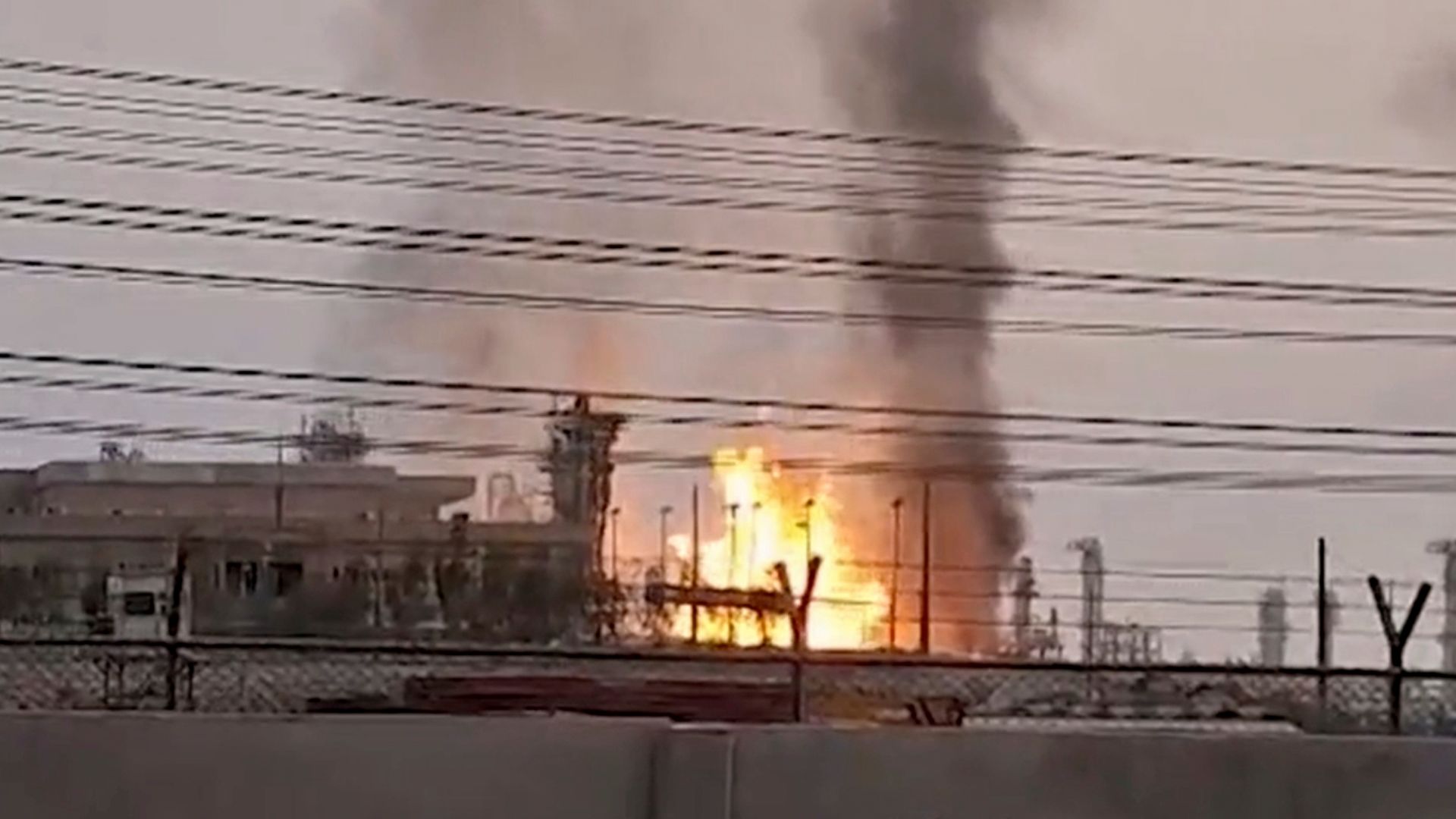
With the world’s largest gas field being set ablaze by Israeli strikes, the cost of the war with Iran is set to climb higher still.
Iran’s Fars news agency reported that gas tanks and parts of a refinery have been hit at the South Pars gas field.
The biggest known gas field in the world, it covers some 9,700 square kilometres in the Persian Gulf.
Iran war latest: New leader vows revenge for assassination
It’s estimated to hold about 51 trillion cubic metres of gas, according to the Guinness Book of World Records.
Oil prices have already spiked following news of the strikes, with the cost of Brent crude rising more than 5% to over $110 a barrel.
Natural gas costs have risen too, with UK wholesale costs up 6% on Wednesday, 60% in the month to date.
What can be done to protect shipping from Iran?
Iran war: The outlook for your finances – whether hostilities end or not
Will the cost of petrol in my car go up because of Middle East conflict?
The South Pars field is split between Iran and Qatar, with the larger Qatari side being discovered first, in 1971.
It’s thought to make up two-thirds or more of Iran’s gas supply, according to state media.
The attack on the field marks the first reported attack on Iranian energy infrastructure.
And the action will increase the cost to Iran of staying in the fight, according to Sky News’ international correspondent Alex Rossi.
He said: “What they’re trying to do is increase the cost – it’s a stream of revenue for the Iranians – and try to make it more difficult for them to prosecute the war.
“Now, that might happen in the long term, but immediately it’s going to be ordinary civilians inside Iran who are going to bear the brunt of this in terms of the cost of living, which is already terribly high and getting worse as a result of wartime.”
Read more:
Voters split over whether Starmer is handling Iran war well
Exclusive: Trump given ‘Vietnam’ warning by Iran
Middle East commentator Tara Kangarlou told Sky News the Iranian output of the gas field was “mainly used domestically”.
Nonetheless, Iranian gas flows to Iraq have also halted, a senior Iraqi official told Reuters.
And Qatar, which shares the field, has reacted angrily to the strikes, calling them a “dangerous and irresponsible” escalation that put global energy security at risk.
Iran itself has promised retaliation, warning it will respond by targeting energy installations in other Middle Eastern nations.
Keep up with all the latest news from the UK and around the world by following Sky News
Mr Rossi said: “We are seeing that those states are responding by evacuating facilities now for fear that they too will be targeted.
“And this is already having a very real net effect – the price of oil has already leapt by 5%.
“So what we are seeing really as a result of this is not a war that is getting any better – it is widening tonight and intensifying.”